

Last Updated on 9 September 2026
A gutter and roof safety audit is a professional inspection of your roof and gutter system that confirms rainwater can drain to stormwater, and identifies the blockages, sagging and rust that cause water damage before winter arrives. For Melbourne homes and buildings, the best time to book one is late autumn, after the bulk of the leaves have dropped but before the winter rain sets in.
We have run this inspection thousands of times across Melbourne. On a recent residential job in Ashburton, the gutters looked ordinary from the street. Up top, one large gum at the back of the property had filled the rear runs with leaf litter, and the water had nowhere to go but up and over. That gap, between a gutter that drains and one that does not, is the difference between rain reaching the stormwater and rain reaching your ceiling.
This guide explains what a safety audit actually checks, why doing it yourself is riskier than most people realise, how it protects an insurance claim, and what it means for rental, strata and commercial properties.
What is a gutter and roof safety audit?
A gutter and roof safety audit is a top-to-bottom check of how well your roof moves water off the building and into the stormwater system. It is not just a look at the leaves in the gutter. A thorough audit covers the parts that fail quietly, long before you see a stain on the ceiling.
A complete audit checks:
- Leaf and debris load in the gutters, and whether it is compacting
- Standing water, which points to a blocked or slow downpipe
- Gutters that sag or sit unlevel between brackets, so water pools instead of running to the outlet
- Rust and staining, which often signal the gutter wall is thinning from the inside
- Roof valleys, where debris collects and overflow starts
- Flashing, ridge caps and penetration points around chimneys, skylights and vents, where the majority of leaks begin
- Ridge cap pointing, since caps that sit by gravity rather than fixed mortar can lift in high wind
- Cracked, slipped, chipped or fractured tiles that let water past the roofline
On a recent single-storey rental in Mulgrave, the gutters were the least of it. Several ridge caps were sitting in place by gravity alone, with the pointing gone, and a few tiles were chipped. Left through a stormy Melbourne winter, caps like that either blow off the roof or drop into the gutters and block the downpipes, which is how a $300 pointing job turns into water in the ceiling. That is why our audit looks at the whole roof, not just the leaf line, and why anything we find is flagged for roof repair before it becomes urgent.
| Property situation | Recommended frequency |
|---|---|
| Few or no overhanging trees | Once a year |
| Typical suburban block | Twice a year |
| Large gums, eucalypts or pines nearby | Three to four times a year |
| After any major storm | Inspect regardless of schedule |
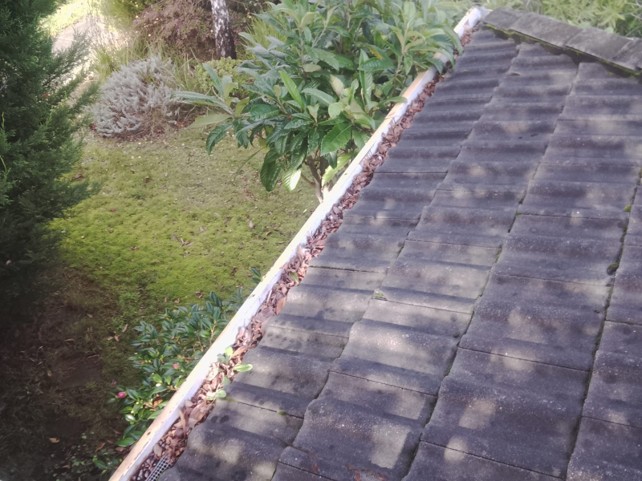
The point of the audit is prevention. Water off a house roof has a large footprint to shed, and if the gutters cannot carry it away, it backs up under the tiles, over the fascia, or into the roof cavity. Catching a blocked downpipe or a cracked tile in April is a simple fix. The same fault left until June becomes an active leak and a ceiling repair.
Why are blocked gutters a water damage problem, not a cosmetic one?
Because water has to go somewhere. When gutters are clogged, rain cannot drain through the system to the stormwater, so it rises in the gutter and escapes the only way it can: over the edge, back under the roofline, or into the ceiling space below.
This is not a rare outcome. Water damage is one of the most common and costly categories of home insurance claim in Australia, and faulty or blocked guttering is a repeat cause. As Allianz Australia notes in its guidance on gutter maintenance, keeping gutters clear is a direct line of defence against water damage and the pests that follow it. Industry reporting has put blocked-gutter water damage in the tens of millions of dollars in a single state in a single year, which tells you how quickly a neglected gutter turns into a structural bill.
For a fuller breakdown of the mechanism, see our explainer on how clogged gutters cause water damage.
Will home insurance cover water damage from blocked gutters in Melbourne?
Usually not, if the cause is poor maintenance or a gradual blockage. Most Australian home insurance policies cover sudden, unexpected events, and many specifically exclude damage that builds up over time from a lack of maintenance. If water backs up through a gutter that has not been cleaned in years, an insurer can reasonably argue that regular maintenance would have prevented it, and decline the claim.
This is where documentation earns its keep. A dated record of professional cleaning, with before and after photos and a roof condition report, is often what separates a paid claim from a rejected one. We cover this in more detail in our article on how clean gutters affect your insurance premium. Policies differ, so check your own product disclosure statement for the exact wording on maintenance and escape of liquid.
Why is a safety audit a job for professionals, not a ladder on a Saturday?
Because the audit itself is the dangerous part. Climbing a ladder to inspect your own gutters combines every risk factor at once: you are working at height, often on uneven ground, with your hands full of wet debris and your attention on the roof instead of your footing.
The numbers are sobering. According to the ACCC’s product safety guidance on ladders, more than 30 Australians die each year from falls involving ladders, and thousands more are hospitalised. In Victoria, ladder-fall injuries have climbed sharply over the past five years. Gutter cleaning is one of the most common reasons people get up a ladder in the first place, which puts homeowners squarely in that risk pool.
There is an insurance sting in the tail too. Many home policies will not cover injuries sustained while a homeowner is doing risky work at height on their own property. A fall can cost far more than the roof ever would.
PorterVac runs the audit from the ground and the roofline using a pole-based vacuum system, so the inspection and the clean happen without a homeowner on a ladder. On a typical single-storey clean, our technician installs full anchor points across the roof before any work begins, takes before photos, runs the vacuum hose, then takes after photos, so the whole job is done to a height-safety standard and documented end to end. Our roof tilers are fully qualified and insured, and every debris load is vacuumed off the roof and taken off site, not blown into your downpipes or left on your lawn. For the difference between vacuum and blower methods, and what that means for your roof, see how much a gutter clean costs in Melbourne.
How often should Melbourne gutters be audited and cleaned?
For most Melbourne homes, once a year is the minimum, and twice a year is the safer rhythm. The right frequency comes down to how much tree cover sits over your roof.
Frequently Asked Questions
What does a gutter and roof safety audit include?
A gutter and roof safety audit is a professional inspection that checks debris load, blocked downpipes, sagging or rusted gutters, roof valleys, flashing, ridge caps and cracked tiles. It confirms rainwater can drain to stormwater and flags faults that cause leaks or water damage, usually paired with a full clean.
Does home insurance cover water damage from blocked gutters in Melbourne?
Usually not when the cause is poor maintenance or gradual blockage. Most Australian policies cover sudden events but exclude damage that builds up over time. A dated record of professional cleaning, with photos and a roof report, helps show the property was maintained. Always check your own policy wording.
How often should I have my gutters cleaned in Melbourne?
Once a year is the minimum for most Melbourne homes, and twice a year is safer. Properties with large gums, eucalypts or pines nearby should be cleaned three to four times a year, because those trees shed year-round. Always inspect after a major storm, regardless of your schedule.
Is it safe to clean my own gutters?
It carries real risk. More than 30 Australians die each year from ladder-related falls and thousands are hospitalised, and gutter cleaning is a common cause. Working at height with wet debris and a blocked view of your footing is dangerous, and many home policies do not cover DIY injuries at height.
What documentation should a strata manager keep for gutter maintenance?
Keep a dated invoice from a licensed contractor for each clean, before and after photos of every gutter run and downpipe, a written report of any damage found, and current public liability and workers compensation certificates. This record supports your duty of care and protects the scheme if an incident occurs.
Who is responsible for gutter cleaning in a rental property?
Gutter cleaning is generally the landlord's responsibility as part of maintaining the property, not the tenant's. Most residential tenancy agreements treat roof and gutter upkeep as the owner's duty. Landlords and property managers should schedule regular cleaning and keep the records, since neglect can void a water-damage insurance claim.
How often should rental properties have their gutters cleaned?
At least once a year, and twice a year where trees overhang the roof. Investment properties are often left longer than owner-occupied homes, which lets debris compact and faults build up unseen. A scheduled clean on a set cycle keeps every property in a portfolio maintained and documented, and prevents small issues becoming tenant complaints.