

Last Updated on 9 September 2026
When the calendar ticks over to April, our phones at PorterVac start ringing more often. Melbourne homeowners can feel it in the air. The days are getting shorter, the southerly is starting to bite, and those autumn leaves are finally on the move. Winter is on the doorstep, and gutter cleaning season is well and truly here.
Over a couple of days in mid-April, our team carried out two domestic gutter cleans on opposite sides of Melbourne’s south-east. One in Glen Waverley with our technician Manju, and another in Oakleigh East with Suresh.
- Both single-storey homes.
- Both in leafy, established suburbs.
- And both told us something useful about how trees, timing and a regular maintenance schedule keep gutters working through a Melbourne winter.
This is the inside view of what those two jobs looked like, and what they suggest about how often your gutters probably need attention.
Job one: Glen Waverley, when the owner has already worked it out
Our first stop was a tidy single-storey home in Glen Waverley. From the curb, you wouldn’t guess the gutters needed any attention at all. Brown concrete tile profile, well-kept front yard, the place looks ready for whatever the weather throws at it.
Up on the roof, the story was a bit different.
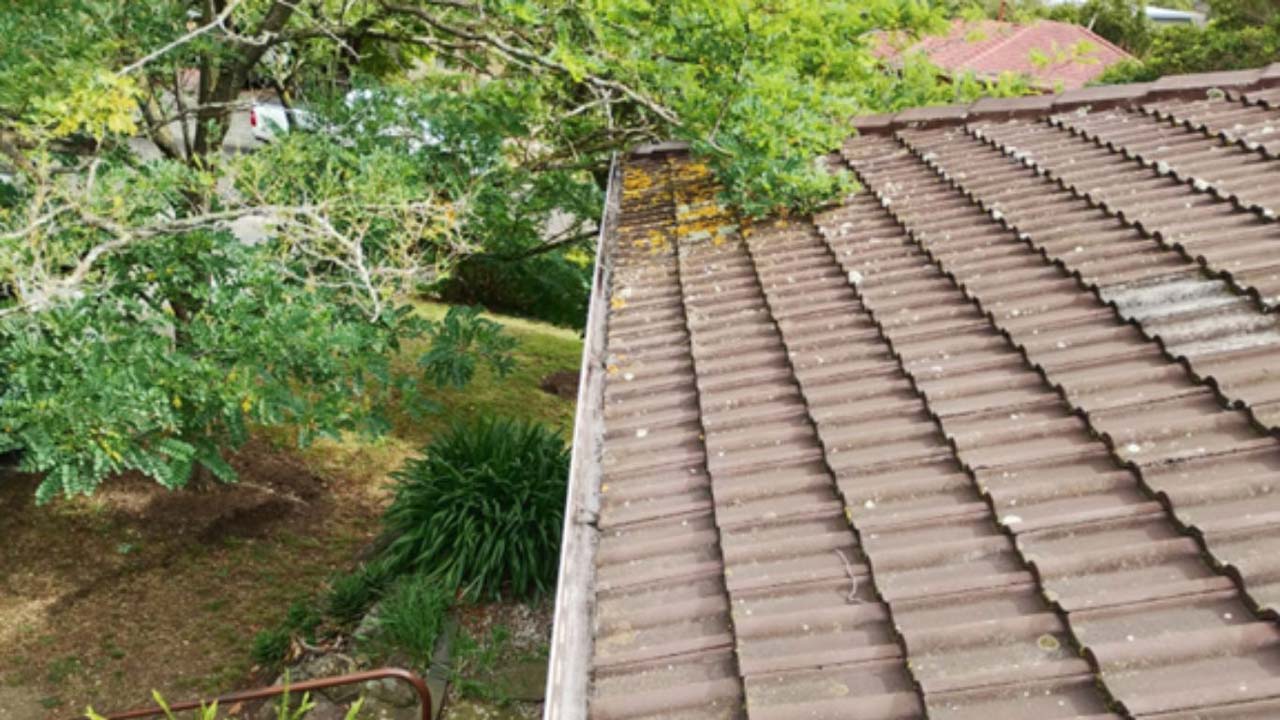
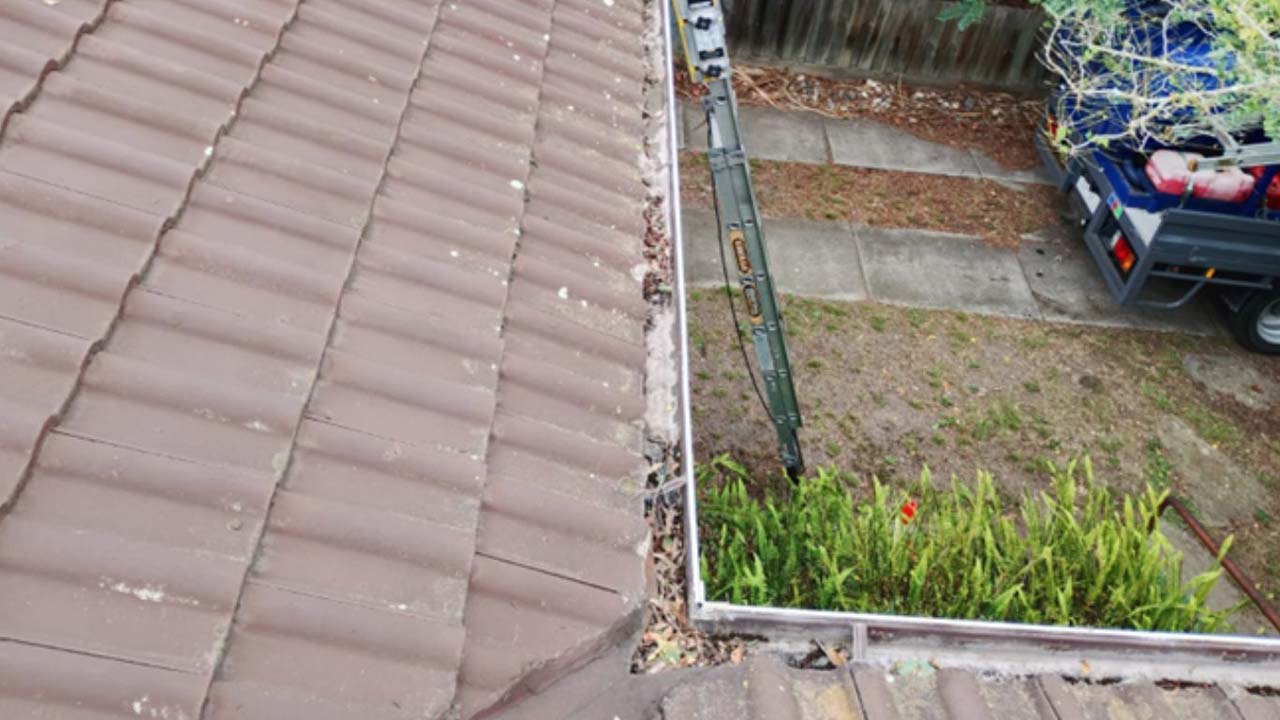
When Manju walked the perimeter, the overall condition was actually pretty good. The straight runs of guttering were largely clear. But in the corners where two runs meet near a downpipe, and directly under sections of overhanging branches, there was a fresh layer of leaf litter, twigs and grit starting to gather. Nothing dramatic. Just enough to start choking the flow if it sat there for another month or two of autumn drop.
What stood out about this job is that the owner had us back only a few months ago. Most homeowners don’t think about their gutters often, but this one is on the ball. Their property is ringed by trees, including some that hang directly over the roofline, and they have worked out that an annual clean simply does not cut it.
As Manju put it onsite, the trees around the premises are the reason the gutters need more frequent attention. The amount of leaf material an overhanging gum, plane or oak can drop in three months is genuinely surprising, and once that material gets wet and compacts, it stops behaving like leaves and starts behaving like a sponge.
Why tree-heavy properties need more frequent cleans
There is a common misconception that gutter cleaning is a once-a-year job. For some properties (clear roofline, no overhanging trees, minimal wind-blown debris), that schedule can be enough. But for most established Melbourne suburbs, where mature trees are part of what makes the area liveable, once a year is rarely enough.
Here is why frequency matters more than most people realise:
- Compaction. A dry leaf weighs almost nothing. The same leaf, soaked and pressed against ten others under a layer of grit, becomes a small dam. Once water cannot move through it, debris stops being “stuff in the gutter” and becomes a flow problem.
- Hidden corners. As Manju noticed at Glen Waverley, build-up does not happen evenly. Corners and downpipe entrances catch debris first, long before the rest of the run looks bad. A property can appear fine from the ground, while the most important sections are slowly clogging.
- Tree species matter. Eucalypts drop fine leaves, bark strips, gumnuts and seed capsules in waves throughout the year, not just in autumn. Plane trees and oaks dump a lot at once. Either way, if they are overhead, you have more material to manage than the average suburban home.
Our rule of thumb: if trees are right over the top of the house, every three to six months is sensible, depending on size and species. Trees nearby but not directly overhead, every six months. Largely tree-free property, once a year before winter is usually enough.
For a deeper look at this question, see our guide on: How often should you clean your gutters in Melbourne?
Job two: Oakleigh East, living next to a nature reserve
A day later, we were across in Oakleigh East, and this job had a very different scale of problem.
The home sits directly alongside a public park, home to some seriously large native trees. Mature gums tall enough to dominate the skyline of the whole street. Beautiful to look at, brilliant for shade, and absolutely punishing on the gutters of any property close enough to be in the leaf-fall zone.
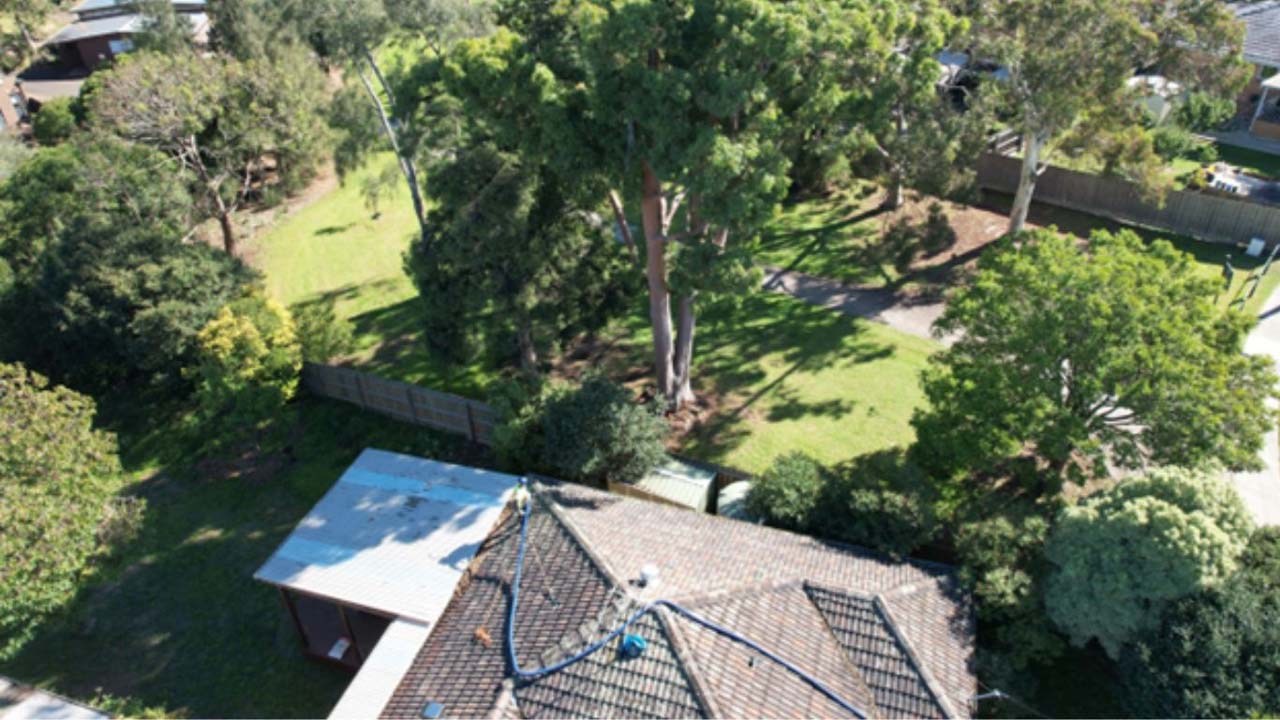
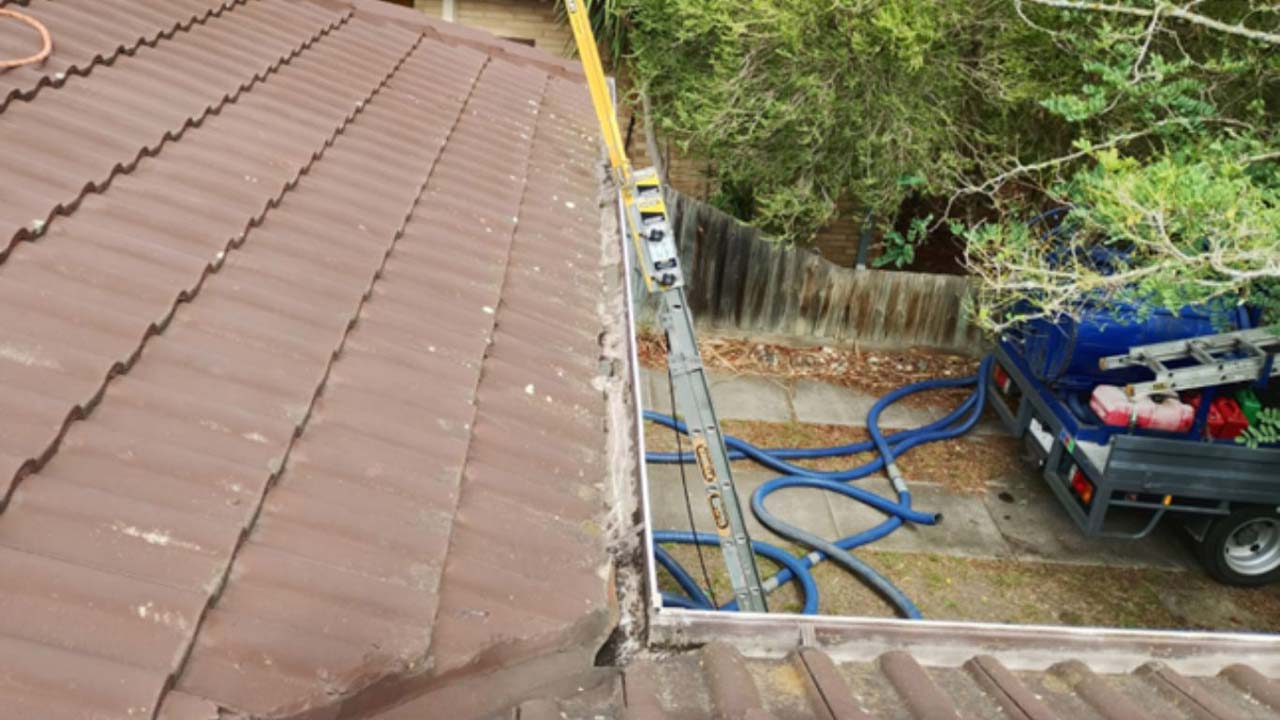
When Suresh got up on the roof, the contrast between the gutter sections facing the park and those facing the street was night and day. The street-facing runs were dirty but manageable. The runs and valleys facing the park were properly overloaded, packed with leaves, twigs, gumnuts and the kind of dark, broken-down material that tells you it has been compacting for months.
For the homeowner, this is not a maintenance failure. It is the cost of admission for living next to a beautiful nature reserve. The trees are not going anywhere, and frankly, you would not want them to. The job is to manage the consequence: keep the roof drainage system clear so that when the heavy rain arrives, the water has somewhere to go.
That last part matters more than it sounds. A blocked valley on a tiled roof during a heavy downpour can push water sideways under the tiles and straight into the roof cavity. Once water is tracking into ceilings, insulation and timber framing, you have gone from a $400 maintenance job to a five-figure repair bill in one decent storm.
How we tackled the heavy load
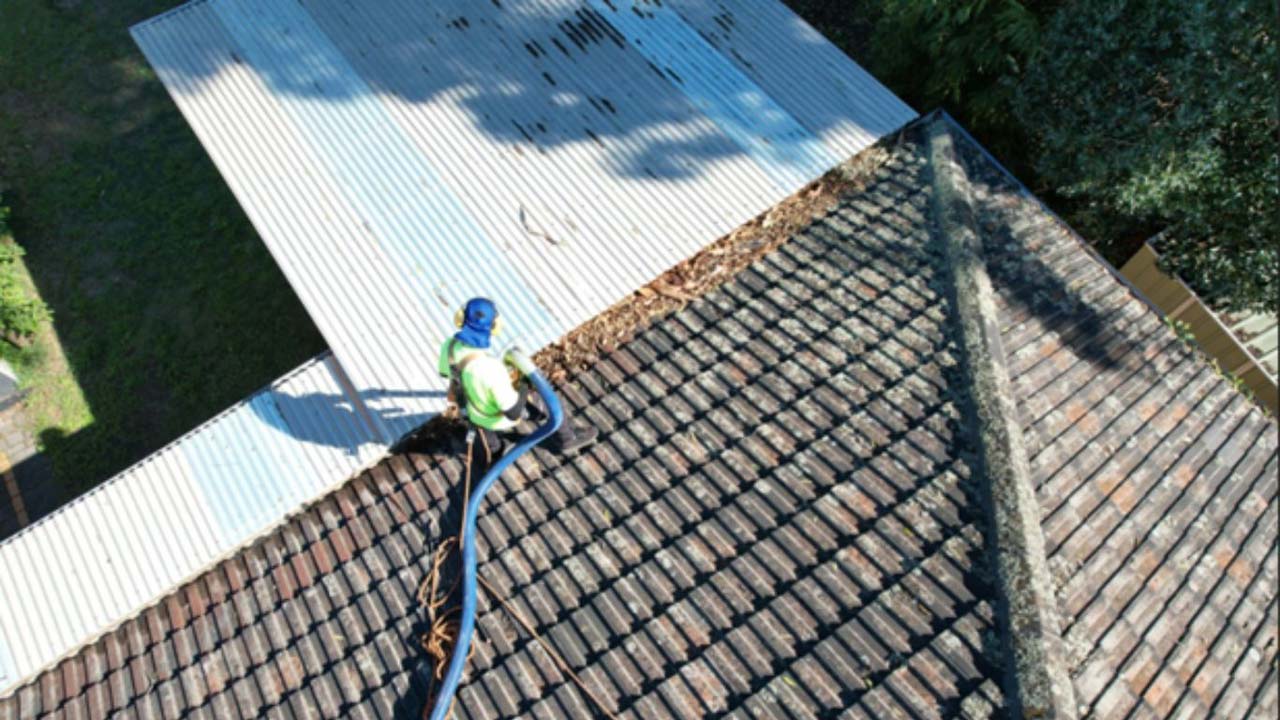
Severely overloaded gutters cannot be cleared with a single technique. They need a combination, and that is exactly what Suresh used at the Oakleigh East job.
The three-step approach we use on heavily compacted gutters:
- Blowing. A leaf blower clears the lighter, dry material sitting on top of the load, and tidies tile surfaces and valleys before the main work starts. It also dislodges debris from awkward spots that a vacuum nozzle cannot quite reach.
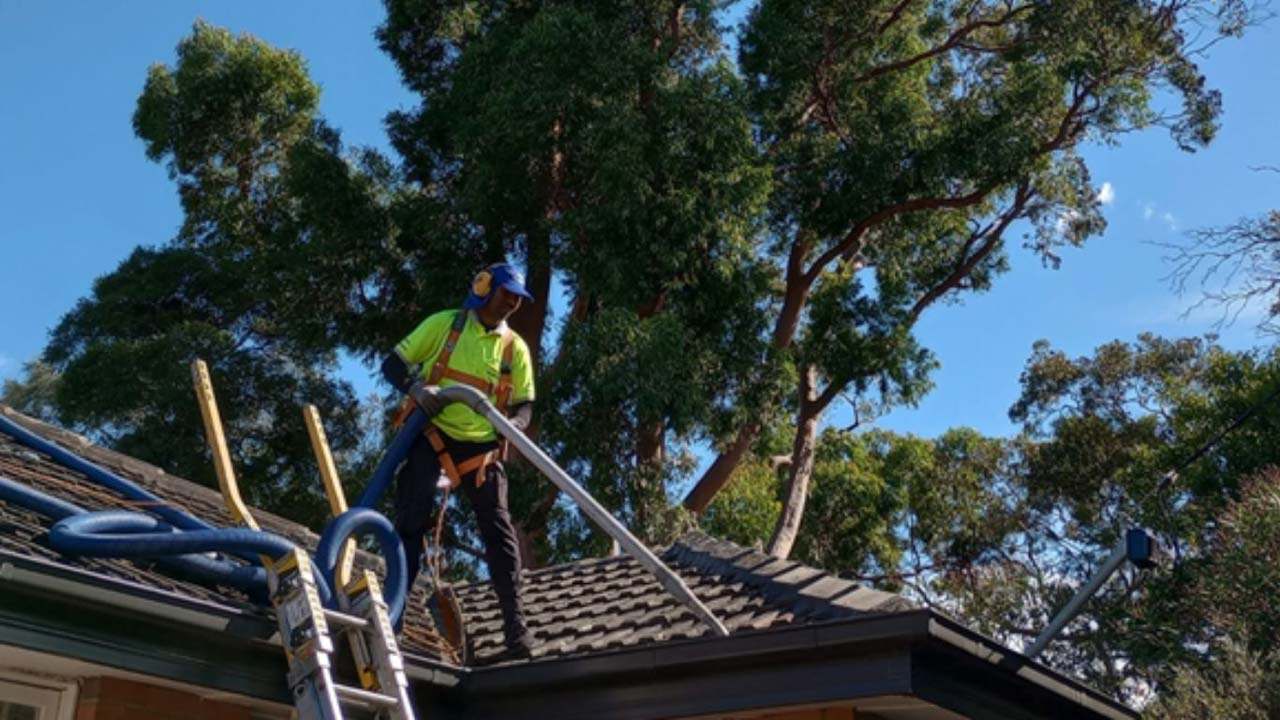
- Vacuuming. Our gutter vacuum systems are the workhorse of any clean. The hose runs from a high-capacity vac unit on the truck up to roof level, where it pulls out the bulk of the leaf matter, twigs, grit and sludge in one pass without making a mess on the ground below. It also keeps debris out of the stormwater system, which is where flushing water down a gutter from a hose tends to send it.
- Scooping by hand. When debris has compacted into a hardened mat (almost always the case in valleys after a big leaf event), neither blowing nor vacuuming alone will shift it. We break it up by hand, then vacuum the broken material out. Slower, harder, but it is the difference between a job that looks done and a job that is done.
If you want a fuller picture of how the vacuum approach differs from the older ladder-and-bucket method, this is a good read: Gutter Cleaning Methods.
Why pre-winter cleans matter so much in Melbourne
Both jobs landed in the second half of April for a reason. There is a sweet spot in autumn, typically late April through mid-May, where most of the heavy leaf fall has happened, but Melbourne’s winter rain has not properly started yet. Cleaning in that window means:
- The bulk of the autumn debris is in the gutter, not still attached to the tree, so we can actually clear it.
- The system is clean and ready before the first prolonged wet stretch arrives.
- You avoid the rush of emergency calls that hit our team after the first big winter storm.
- Any small roof issues we spot during the clean (cracked tiles, lifted flashings, deteriorating seals) can be addressed while the weather still allows it.
For more on the autumn cycle and how it plays out across Melbourne suburbs, see: Seasonal Gutter Cleaning Guide for Melbourne
How often should you be booking a clean?
Use the table below as a starting point, then adjust to your specific property.
| Property type | Recommended frequency | Best timing |
|---|---|---|
| Heavy tree coverage with branches directly over the roof | Every 3 to 6 months | Pre-winter (April–May) and again before storm season |
| Mature trees nearby but not directly overhead | Every 6 months | Autumn before winter, then again in spring |
| Newer estate, minimal tree cover | Once a year | Late autumn before the wet weather sets in |
| Next to a park, reserve, or significant native tree cover | Every 3 to 4 months | Autumn, late winter, and after major wind events |
| After major weather events | Ad hoc check | Within a week of a serious storm or wind event |
Watch for these warning signs that you are overdue, regardless of the schedule:
- Water spilling over the front of the gutter during rain
- Plants growing out of the gutter
- Visible sag in the gutter line
- Water marks below the gutter line, or staining on external walls
- Damp patches on internal ceilings near the eaves
Any of those, and it is time to book.
Roof Restoration: Everything you need to know
A quick word on safety
Falls from ladders cause serious injuries every year across Australia, and roof work (especially on tiles, especially when wet) is genuinely risky. For anything beyond a quick visual check from the top of a stable ladder, bring in someone who does this every day, has the right safety gear, and knows what to look for. Both Manju and Suresh work with proper harnesses, ear protection, and ladder stabilisers, and PorterVac is fully insured to be up there in the first place. Safe Work Australia publishes good general guidance on working at heights for anyone wanting to understand what a safe set-up actually looks like.
If you want a fuller breakdown of why DIY gutter work goes wrong, this covers it: The pros and cons of DIY Gutter Cleaning
Booking in before winter hits
If you have got trees over the top of your house (or anywhere near it) and cannot remember the last time the gutters were properly cleaned, this is the window to act. The autumn drop is mostly done, the wet weather is on its way, and the gap between a clean gutter system and a blocked one will show up the first time we get a serious downpour.
Two easy ways to book a pre-winter clean:
- Call us on 1300 833 399 for a quote and a booking time
- Contact PorterVac online and we will come back to you with a time that works
If you would like a sense of how Melbourne homeowners rate the work before you book, our Google reviews are a fair test.
Frequently Asked Questions
How often should I get my gutters cleaned if there are trees over my roof?
For homes with branches directly above the roofline (particularly natives like eucalypts, or heavy droppers like plane trees and oaks), every three to six months is a sensible schedule. The Glen Waverley property runs on roughly that schedule, and the gutters reflect it: manageable build-up rather than a major job each visit.
Why do gutters block faster in autumn?
Autumn is when most deciduous and many native species shed the bulk of their annual leaf load in a relatively short window. That sudden volume, combined with the first proper rain, creates the perfect conditions for compaction. Dry leaves move easily through gutters; wet leaves layered with roof grit do not.
Can I just clear the leaves with a leaf blower from the ground?
For light surface scatter, sometimes, but it does not address the causes of flow problems. The material that blocks gutters is rarely the dry stuff on top. It is the compacted, moisture-heavy layer underneath, which a blower will not shift. That is why our team uses heavy-duty gutter vacuums combined with a hand-clear of any matted material.
Do gutter guards mean I will never need another clean?
No. Gutter guards reduce how much debris enters the gutter, which is genuinely useful, but they do not eliminate the need for periodic cleaning. Fine material still works through, and on properties surrounded by mature trees, debris can build up on top of the guard. Treat guards as a way to extend your cleaning interval, not replace it.
What happens if I leave blocked gutters until after winter?
The most common outcome is overflow, with water spilling over the front edge of the gutter during heavy rain. That can stain external walls, saturate garden beds against the foundation, and in worst cases, push water back under the tiles into the roof cavity. Internal ceiling damage from a blocked roof is one of the more expensive home repairs to fix, and it is almost always preventable.
How do I find the best gutter cleaning company in Melbourne?
Best depends on what you weigh up: price, safety, mess, equipment, insurance, and whether the operator turns up when they say they will. Rather than naming a single company, here is what we would suggest looking for in any Melbourne operator:
- A vacuum-based system rather than ladder-and-bucket, especially on tile roofs and two-storey homes. It is cleaner, safer, and keeps debris out of your stormwater.
- Full public liability insurance and the right working-at-heights gear (harnesses, anchor points, ladder stabilisers). Ask for proof if you are unsure.
- A walkthrough of what was found and what was cleared before they leave the job. You should not have to take it on faith that the work was done properly.
- Genuine local Google reviews from Melbourne homeowners, not a handful of generic five-stars from accounts with no other activity. Honest advice on cleaning frequency based on your trees and roof type, rather than a one-size-fits-all schedule designed to lock you into a contract.PorterVac is built around exactly those points, which is why we work with homeowners, landlords, owners' corporations, and property managers across Melbourne and its surrounding suburbs. The fairest test is to read what people who have actually used us say on our Google profile, then judge for yourself.
Does PorterVac cover suburbs outside the south-east?
Yes. The Glen Waverley and Oakleigh East jobs above are typical of our south-east work, but our team services the whole of Melbourne and surrounding suburbs. The full coverage area is on our areas we serve page.